
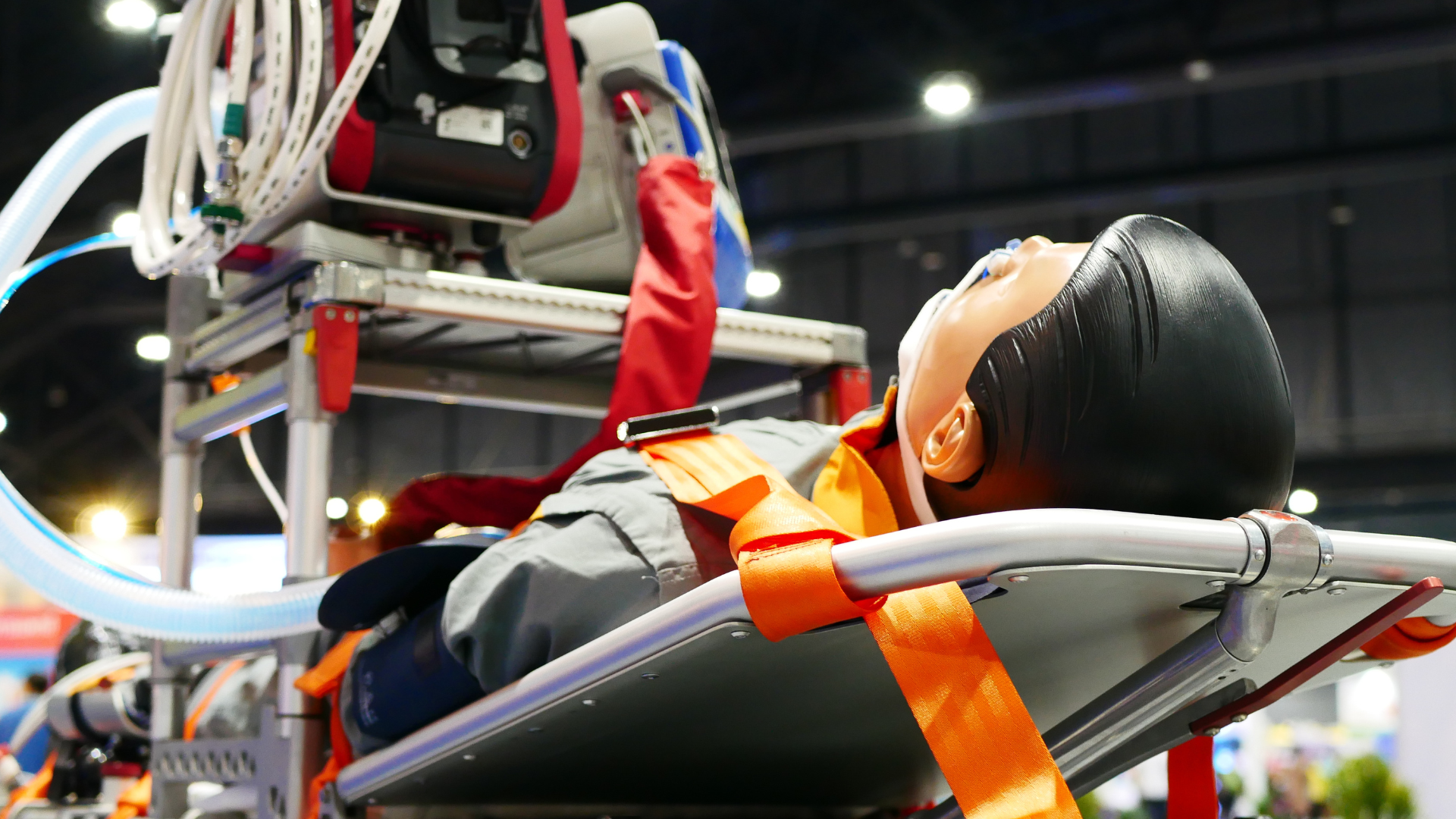
Prehospital Ventilator Life Support (PHVLS)
A Mechanical Ventilation Master Class for EMS Professionals
An immersive learning experience on the art and science of mechanical ventilation unlike anything you’ve experienced before.
The Definitive Course for Mechanical Ventilation Training for EMS
Training designed to meet the unique challenges of mechanical ventilation care in the prehospital environment.
Workshop Includes
2-Day Hands-On Workshop
Workshop is tailored to your specific equipment and guidelines
Interactive patient scenarios designed to challenge learners to think critically, problem-solve, and apply what they’ve learned.
Comprehensive final exam
Downloadable study guide
Downloadable certificate of completion
16 hours of continuing education credit for EMS and Nurses.
3-year certification
Students are strongly recommended to take Basic Ventilator Life Support (BVLS) before this workshop.
Discounted BVLS + PHVLS Bundle available
Workshop Requirements
Must hold a current A-EMT, Paramedic, RT, or RN license.
Physician Advisors are also welcome and encouraged to attend.
* Students must attend the entire workshop to receive credit. Partial credit will not be awarded.
Continuing Education Hours
RN hours awarded through the California Board of Nursing
EMS Hours awarded through FlightCrit, a Colorado approved EMS Training Group
Course covers…
Basic principles and importance of early effective mechanical ventilation
Equipment and Logistical Challenges in the out-of-hospital environment
Critical A&P Review
Essential Gas Law and Their Application
Effective Delivery of Non-Invasive Ventilation (HFNC / CPAP / BPAP)
ETT / Surgical Airways / Supraglottic Devices Considerations
Breath Types, Vent Settings, Alarms, Triggers, and Limits, including
Pressure Control vs. Volume Control
Tidal Volume, Respiratory Rate, PEEP, FiO2, Flow, and Driving Pressure,
Basic and Advanced Modes available on transport ventilators, including
Pressure Support, CMV, Assist Control, SIMV, PRVC, IRV, APRV, ASV
Basic and Advanced Patient Monitoring and Troubleshooting, including
Blood Gasses, SpO2, EtCO2, and Volumetric Capnography
Loops and Pressure / Flow / Volume Waveforms
Lung Point-of-Care-Ultrasound
Patient Management in the out-of-hospital environment
Cardiac Arrest
Trauma / Burns / Drowning
Severe Obstructive and Restrictive Physiology
Static and Dynamic Compliance
Time Constants
Special Population
Chronic vented patients
Pediatric, Geriatric, Obstetrics
Schedule a course for your team today!
Prehospital Mechanical Ventilation is Supported by both the National Association for EMS Physicians (NAEMSP) and the American Association for Respiratory Care (AARC)
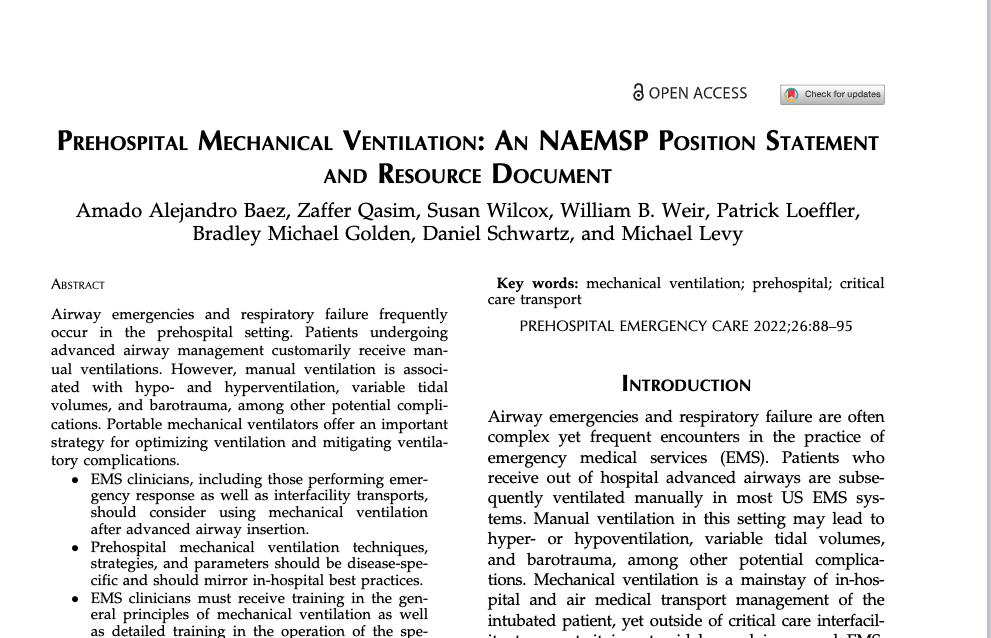

National Association for EMS Physicians Position Statement on Prehospital Mechanical Ventilation
NAEMSP recommends the use of invasive mechanical ventilation for hypoxic respiratory failure, hypercapnic respiratory failure, and airway protection. These may be on initial contact from an emergency ground ambulance response, or during interfacility transfers via critical care teams.
EMS Clinicians must Receive Training in the General Principles of Mechanical Ventilation as Well as Detailed Training in the Operation of the Specific System(s) used by the EMS Agency.
American Association for Respiratory Care Position Statement on Pre-Hospital Ventilator Management
It is the position of the American Association for Respiratory Care (AARC) that all persons involved in the setup, initiation, application, and maintenance of mechanical ventilators in the pre-hospital setting be formally trained in both the clinical and disease-specific applications of mechanical ventilation.
The AARC recommends that all pre-hospital providers of mechanical ventilation be required to demonstrate competence, at regular intervals, in the use and manipulation of all mechanical ventilators used during the transport of sick and injured patients.

Registration Fee: $375 per student*
Includes all travel expenses
Minimum Class Size = 12
Maximum class size depends on the number of available ventilators
*Fees for classes held outside the continental US may be different